As the EU prepares to soften its 2035 petrol and diesel phase‑out, the debate over how fast nations can shift to electric vehicles is becoming a defining test of their climate ambitions.
Sustainability update December 2025
7 January 2026
Article last updated 8 January 2026.
“Decoupling” trend indicates GDP growth no longer linked to carbon emissions in most global economies
As the Paris Agreement reached its tenth anniversary, a report by the Energy and Climate Intelligence Unit (ECIU) showed that most major economies have managed to grow while reducing or slowing their carbon emissions. Using data from the Global Carbon Budget, the report found that countries making up 92% of the world’s economy have either fully or partly decoupled emissions from economic growth.
From 2015 to 2023, countries representing over 46% of global GDP grew their economies while cutting greenhouse gas (GHG) emissions in absolute terms, meaning emissions remained stable or fell while the economy grew. And countries representing a further 46% of global GDP still saw GHG emissions rise, but at a slower rate than economic growth.
The ECIU’s report indicates widespread decoupling across Europe, North America and major economies in the Global South. Western Europe recorded some of the largest proportional emissions reductions, particularly in Norway, Switzerland and the UK. Despite policy changes under the Trump administration that shifted support from low carbon technologies to fossil fuels, the longer-term decline in domestic emissions in the US means the country remains on an absolute decoupling pathway.
China, the world’s largest emitter, is on a relative decoupling pathway but has significantly reduced its economic dependence on fossil fuels. Its economy grew more than twice as fast as its emissions between 2015 and 2023, and emissions have levelled off in the past 18 months, suggesting they may have peaked. Globally, annual emissions growth has slowed to 1.2% since the Paris Agreement, compared with 18.4% in the previous decade.
Environmental systems at tipping point
The ECIU’s research coincided with the publication of the 7th edition of the UN Environment Programme’s Global Environment Outlook report (GEO-7) which emphasised that the world was confronting multiple, mutually reinforcing environmental crises pushing planetary systems towards irreversible tipping points: climate change, biodiversity loss, land degradation, and pollution are intensifying together rather than separately, and current development pathways are incompatible with climate stability and planetary health. However, the report highlights that large-scale changes in energy, food, finance, materials, and environmental restoration could deliver huge benefits, potentially adding $20 trillion a year to the global economy by 2070 and beyond.
GEO-7 also warns about the significant environmental costs of food and fossil fuel production. It estimates that unsustainable production of food and fossil fuels around the world causes $5 billion of environmental damage every hour, with the annual environmental cost of global industrial agriculture is estimated to be $45 trillion. Food systems comprise $20 trillion of that cost, with transport contributing $13 trillion and fossil fuel-generated electricity accounting for $12 trillion.
To remedy this, GEO-7 focused on five core transformative strategies: the shift to more environmentally friendly diets, especially in developed economies; sustainable fisheries and more efficient and environmentally sensitive crop and livestock farming; global business- and consumer-led food waste reduction; increased exploration of new food types and production methods with smaller environmental impacts; and the reform of global food systems, emphasising locally grown produce and diversified supply chains.
As part of its Fit for the Future 10-year health plan for England, the UK government announced that large food businesses will be mandated to report against standardised metrics on healthy food sales. Businesses will also be required to set mandatory targets to increase healthy food sales in all communities. This was a core engagement focus of the Greenbank-led Investor Coalition on Food Policy since its establishment in 2021, and the work of the Coalition was referenced in a ministerial letter announcing the introduction of mandatory reporting in August.
Nature Recovery and Environmental Policy: England’s EIP and the EU’s Deforestation Regulation
In 2022, nature services in England delivered economic benefits worth over £37 billion, more than any single manufacturing sector. By 2024, the Office for National Statistics valued England’s natural assets at £1.3 trillion. Without intervention, issues like poor soil health, water shortages, and biodiversity loss could cut the UK’s GDP by 3% in the next decade.
Recognising that nature underpins wellbeing, the economy, and communities, the Department for Environment, Food & Rural Affairs (Defra) launched a revised Environmental Improvement Plan (EIP). This builds on the Environment Act 2021 and sets 10 strategic goals to improve England’s environment by 2043. Its main aim, “Restored nature”, includes protecting 30% of land and sea by 2030. Other goals focus on cleaner air and water, reducing harmful chemicals, promoting a circular economy, and tackling climate risks.
Meanwhile, the European Parliament has delayed implementation of the EU Deforestation Regulation (EUDR) for another year. This law requires products like beef, cocoa, coffee, palm oil, and soy to be “deforestation-free” and legally produced. Critics of the EUDR argue that sectors are not ready for its strict rules and that the framework needs simplification. Large businesses now face a December 2026 deadline, and smaller firms a June 2027 deadline, with key challenges being the economic and logistical questions raised by commodity-producing trading partners, the readiness of the European Commission to process due diligence statements and verify compliance, and the ability of operators and auditors to meet strict due diligence requirements, especially across complex supply chains.
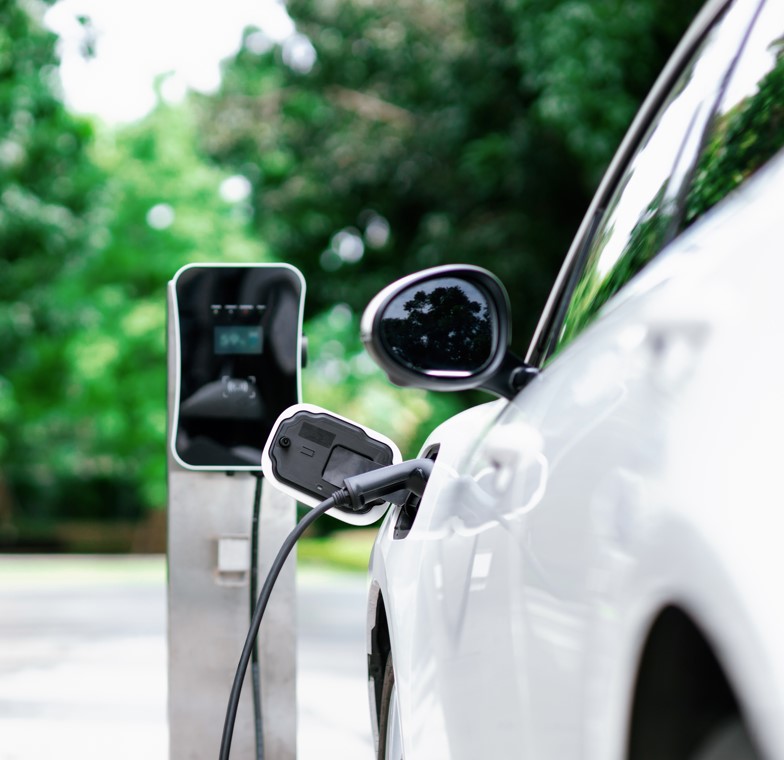
EU rolls back on commitment to ban new petrol and diesel car sales by 2035
While the EU’s policy reversal on petrol and diesel car sales is yet to be finalised, it looks increasingly likely that the 2035 deadline will be pushed back to accommodate a more “pragmatic” regulatory approach. Major European automakers and key member states – notably Germany and Italy – have lobbied hard for an extension to the 2035 deadline, arguing that EV adoption is uneven and slower than anticipated, that supply chains and charging infrastructure are underdeveloped, and that strict deadlines threaten jobs and production in one of the bloc’s principal sectors. German chancellor Friedrich Mertz openly called for a more flexible regulatory framework to keep industry options open and avoid the potential fallout from an “abrupt change” in 2035.
Under the European Commission’s revised plan, 90% of new cars sold from 2035 would have to be zero emission, rather than 100%. This still pushes towards decarbonisation but would allow manufacturers to sell some low-emission petrol, diesel, and hybrid vehicles past 2035 if overall emissions objectives are met. Carmakers will be expected to use low-carbon “green” steel manufactured in the EU in vehicle production, and the Commission has set out plans to increase the use of biofuels and so-called e-fuels synthesised from captured carbon dioxide. Environmental campaigners and many EV advocates have nevertheless criticised the revision, warning that postponing the 2035 deadline undermines the EU’s Green Deal and slows the transition to cleaner transport.