Greenbank’s Ethical, Sustainable and Impact Researcher Charlie Young shares his insights from the Finance for Biodiversity Summit 2025, exploring the world’s most pressing nature-related topics and collaborating to drive measurable progress across the financial sector.
Greenbank at the Finance for Biodiversity Summit 2025: Turning Pledges into Progress
9 December 2025
Article last updated 9 December 2025.

Charlie Young
Ethical, Sustainable and Impact Researcher
As investors, we have a critical role to play in tackling nature loss because the businesses we invest in both rely on healthy ecosystems for resources and resilience, while their operations, products, and services can also impact those same systems. These interactions create material risks and opportunities for those companies, and by extension, for investors.
In recognition of this, Greenbank has been an early signatory of the Finance for Biodiversity Pledge and an active participant of the initiative since it was founded in 2020.
You can also read more about Greenbank’s approach to integrating nature into decision-making via our new nature research series: Integrating Nature – Pathways for Investors.
Finance for Biodiversity Summit 2025:
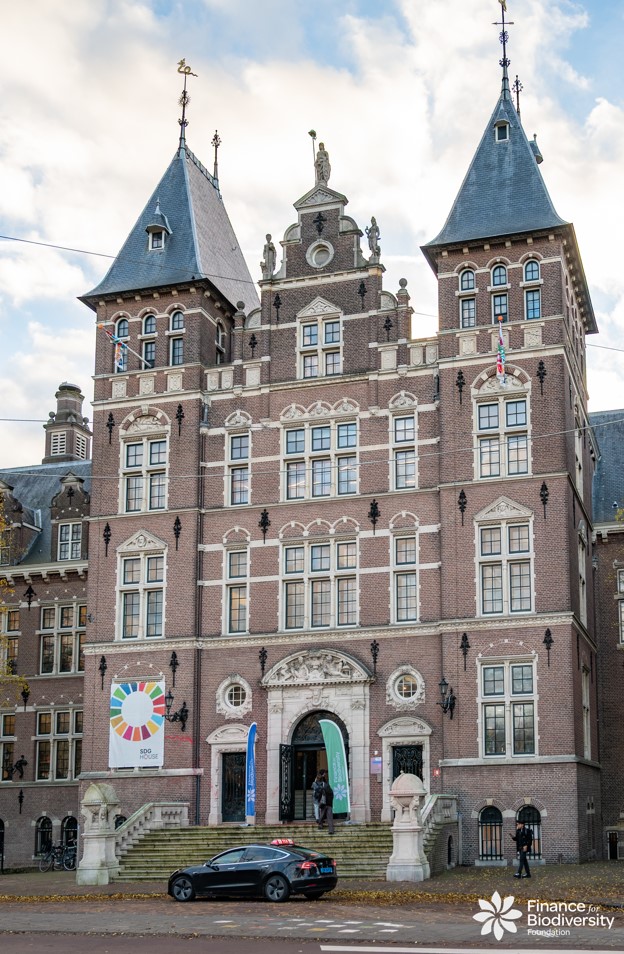
On 4th December 2025, Greenbank joined leading financial institutions, policymakers, and biodiversity experts at the inaugural Finance for Biodiversity Summit in Amsterdam. The event marked a pivotal moment for the financial sector, shifting the focus from commitments towards concrete action on nature-related risks and opportunities.

Discussions throughout the Summit highlighted the urgency of integrating biodiversity into financial decision-making. Keynote speakers stressed that the financial materiality of nature is becoming increasingly clear, alongside a stronger understanding of best practice for addressing biodiversity loss.
“We must now focus on accelerating our alignment to the Global Biodiversity Framework” - Astrid Schomaker, Executive Secretary of the Convention on Biological Diversity"
The Summit particularly reinforced the importance of transparency and collaboration. Breakout sessions provided practical insights into evolving biodiversity data tools and innovative approaches to assessing natural capital assets. Throughout, Greenbank shared perspectives with peers and nature specialists on methodologies for measuring biodiversity impact, the importance of “imperfect” approaches and public disclosures, and how public and private financial flows can both directly and indirectly support nature-positive outcomes.
Panels further explored how investors can align with the Global Biodiversity Framework by embedding nature into corporate impact assessments and research. Importantly, speakers reflected upon the fact that this does not come down to a “one size fits all” approach and requires ongoing collaboration and awareness-raising to create collective action across financial institutions, companies, and other key stakeholders.

Another recurring theme was the need for clarity and commitment at the policy-level to both reduce harmful financing and to drive positive outcomes across climate- and nature-related themes. This too will unlock emerging investment opportunities that support ecosystem protection and restoration.
Overall, the conversations in Amsterdam were not just about ambition. Indeed, they were about implementation. As the finance sector accelerates efforts to halt and reverse biodiversity loss, Greenbank remains committed to driving progress through ethical, sustainable, and impact investment, alongside active company and policy engagement. We look forward to building on the insights gained at the Summit to strengthen our approach and help shape a financial system that values and protects nature.