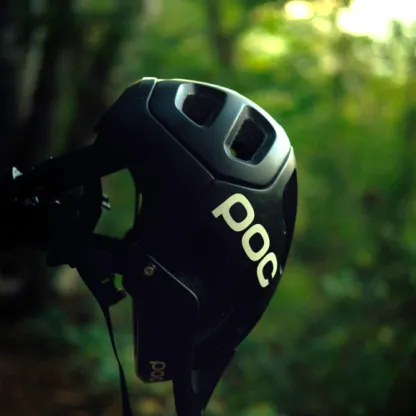
A year after visiting Mips' Stockholm headquarters, we reflect on how the helmet safety specialist is navigating a challenging consumer market while expanding into new safety applications. From cycling and construction to smart protective equipment, Mips aims to play an important role in this increasingly dynamic market.
Mips: Reflections on a visit to Stockholm in 2025
27 August 2026
Article last updated 11 September 2026.

Will Findlay-Wilson, Investment Analyst
A brand that’s everywhere, but do people know what this yellow dot means? This is Mips, a Swedish ingredient brand specialising in helmet safety. Its patented safety system, built on 25 years of scientific research, protects against the dangers of rotational motion. In September 2025, we had the opportunity to visit Mips’ headquarters (HQ) on the outer edge of Stockholm. Here, the company’s research and development (R&D) effort delivers next season’s products and innovations to protect brains and bodies in the future. A year on from this visit, we reflect on what’s happened since. We reflect upon why despite the pain felt in its heritage cycling market, we still think Mips is well positioned to take on new challenges.
Key Takeaways:
• Mips’ team of research personnel, years of testing data, testing facilities in Sweden, and breadth of relationships across the field make it an invaluable safety partner for academics, sports brands, and standard setters
• The acquisitions of Koroyd and Quin see Mips access more real-world crash data and expand products into broader PPE
• Regulation in the industrial and construction markets is pushing more workers towards helmets with fuller coverage - in response many brands are implementing premium solutions like Mips
• Mips continues to win market share in the heritage cycling segment, whilst the industry is barely growing
The testing lab and position in 2025
Mips is a Swedish company specialising in helmet safety, residing within our 'Health and wellbeing' sustainable development theme. Mips’ patented low-friction layer safety systems are fitted into helmets and are designed to ensure that crash impacts are borne by the helmet's motion, reducing the risk of traumatic brain injuries. On a bright September morning in Stockholm, we visited Mips testing facility in the Taby neighbourhood to sit down with management and see research capabilities for ourselves.
We began our tour with Mips’ offices, where the company showcases its products across sport (bike, snow, equestrian), moto (on road, off road) and safety (construction, emergency response). The initial lab contains an extensive set of testing rigs designed to conduct a variety of impact tests for helmets. Here, Mips’ portfolio of solutions is customised to suit individual helmet models – from Specialized in cycling to MSA Safety in construction. We witnessed the 95,198th test, and Mips engineers watched on and measured the forces acting on the head form at impact.
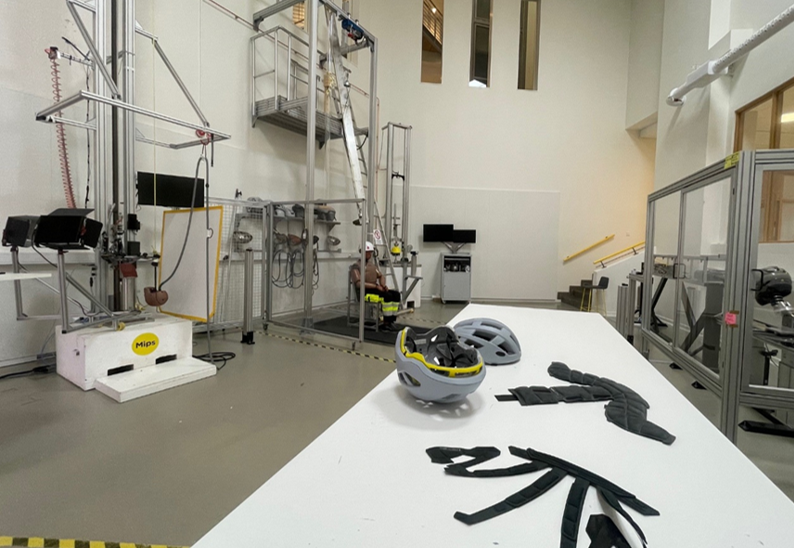
Inside Mips testing lab
Across the lab, Mips conducts more complex experiments designed to test areas outside today’s standards – neck compression, trips and falls, and testing new fabric solutions. Conducting this research is Mips’ 60+ strong team of researchers (71+ post-Koroyd acquisition)¹, across a Mips organisation of 127 people.² The company then brings these insights to bear when, alongside individuals from helmet brands and academics, it sits within industry bodies to advise on the development of standards. With its strong financial position, Mips has maintained headcount and increased R&D spending over the last several years. R&D budgets for brands have been squeezed since Covid, as cycling has gone from a sales boom to overstocking, steep discounting, and some high-profile bankruptcies. In its concentration of helmet knowledge and testing data, we believe Mips offers important expertise for brands in hard times, as much a helmet consultant and innovation partner as a supplier.
When we were in Stockholm, the market for consumer products, including the cycling market, felt like it was in a never-ending series of crises - from overstocking, to inflation, a faltering consumer and finally tariffs. Despite the turbulent times, management has consistently spoken to the underlying health of the business and the thematic drivers of better head protection despite a volatile share price.
“Mips’ patented low friction layer safety system is fitted into helmets and is designed to ensure that crash impacts are borne by the motion of the helmet, not the rider’s head, reducing the risk of traumatic brain injuries.”
Fast forward to today…
Where we sit today, we believe Mips may be beginning to benefit from the strategy implemented during those fallow years.
Sport - Europe continues strong growth
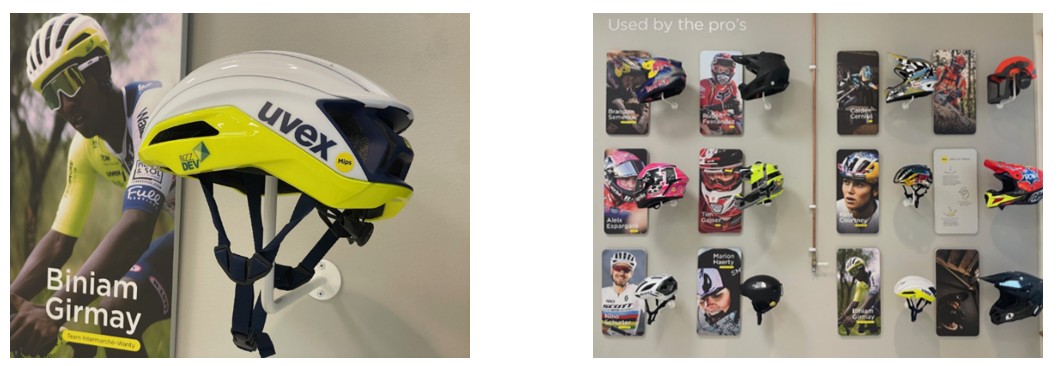
Mips’ revenues are dominated by the sport segment, at roughly 90% of total, the main bulwark is cycling. The Mips solution is trusted by big brands and top sportspeople all around the world. According to Mips, four out of five World Cycling Tour teams use helmets equipped with Mips technology. This product popularity is something we monitor. Performance remains strongest in the US, which makes up over 50% of revenues, but the question remains whether the company can take European penetration to US levels – 50% penetration according to management. Over the last year, evidence increasingly points towards continued penetration gains. In the US performance looks to have turned a corner - Mips posted 32% organic growth here from March to June in a weak market. Despite weak underlying markets, Mips posted over 50% organic growth in Europe in 2025, consistent with the increasing prevalence of Mips across brands and price points. Market conditions across the year could well change, but we find the growing product portfolio, continued position at the top of sport, along with reach into new price points, encouraging for the fundamental financial and impact stories.
“According to Mips, four out of five world cycling Tour teams use helmets equipped with Mips technology.”
Innovations and acquisitions
Mips, or the Mips Group as we sometimes see the company described, has pursued two meaningful investments to further its ambitions post the Covid period:
In August 2023, Mips took a 25% stake in Quin, a sensor technology that collects data on crash impacts and shares real-time data with emergency responders. Quin is too small to impact the financials today, but data from Quin’s installed base, which records motion and movement thousands of times per second, is shared with Mips monthly. Beyond sport, we have seen industrial helmet brands showcasing Quin-enabled Smart PPE at recent trade shows – introduced, no doubt, through Mips. Product traction remains to be seen, but product launches are a demonstration of Mips standing within its customer base.
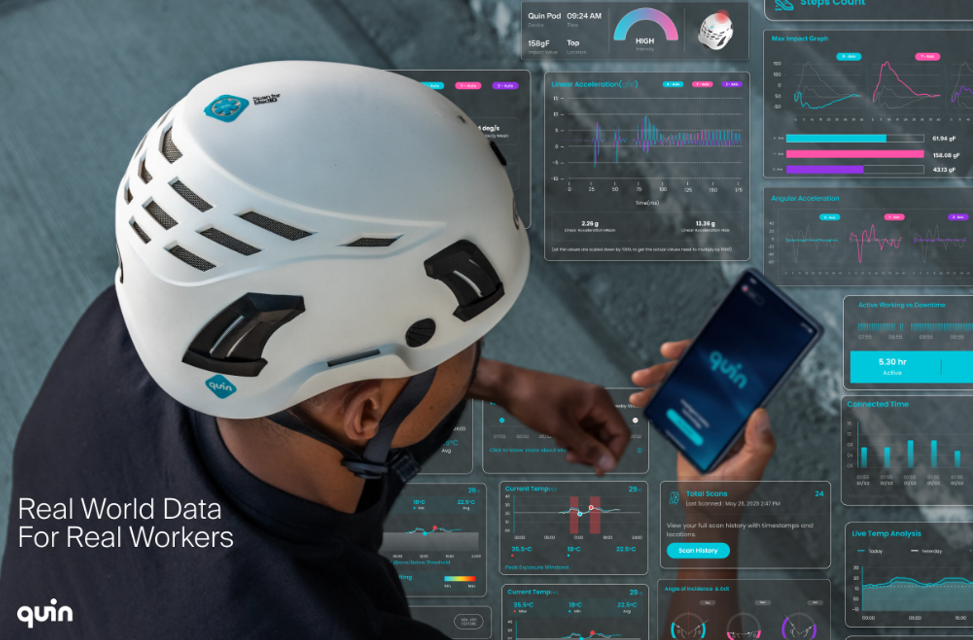
Quin sensor technology
In December 2025, Mips acquired Monaco-based safety company Koroyd. Koroyd, known for its shock absorption technology, complements Mips’ rotational-impact system, expanding product reach and the impact story into footwear, body protection, gloves, child seats, and industrial safety. Mips and Koroyd are already used in tandem in some high-end snow helmets, but with the acquisition, management has signalled that a combined product will be launched to the market in 2027. Koroyd is a highly profitable business, growing revenue at 15% YoY. In Mips' hands, with its strong reputation and diverse customer base across relevant end markets, we view this acquisition as highly attractive.
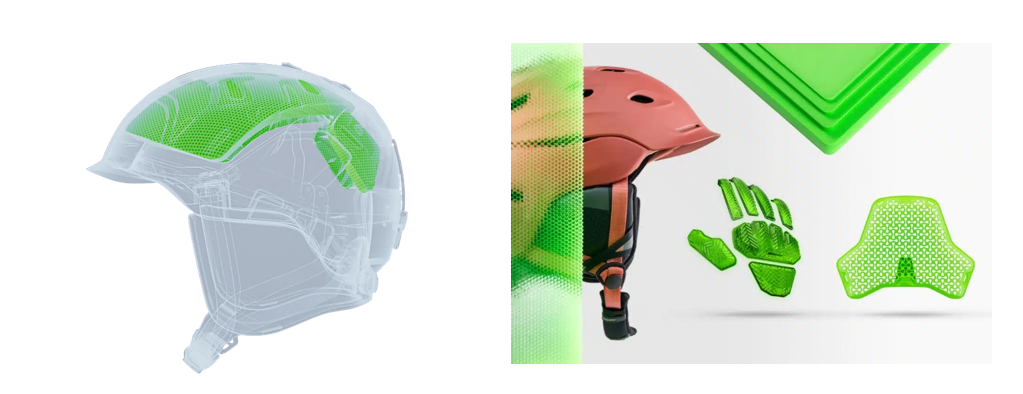
Koroyd direct impact protection
Safety
Safety, particularly construction, appears to present a sizeable opportunity. Whilst precise definitions vary, those in the industry believe the category is bigger than sport by some margin. Importantly, we are seeing the early signs of traction.
Across the industrial safety market, enhanced regulations are increasingly pushing brands to fuller coverage. In late 2023, US regulatory agency OSHA introduced an update to head protection guidance in place for a decade. OSHA has begun recommending type-two helmets with a chin strap to workplace safety environments where multi-directional impacts are a risk – a lot of environments. No mandate requires employers to use Type II helmets with better coverage; however, OSHA has adopted safety helmets for its own field personnel, and placed the onus upon employers to choose the right protection based on their own risk assessment. Interestingly, many brands responding to these changes in the market have elected to incorporate technologies like Mips, and more importantly, adoption has not been confined to a few flagship products, and is beginning to cascade through product ranges. Sales have been slow, and there is no guarantee that Mips' position in sport translates into the safety market, where purchasing decisions can be driven by minimum standards. That being said, it costs brands to certify helmets to regulatory standards across markets and models, and the number of leading brands committing to this sunk cost is encouraging. Koroyd’s success in this market to date, despite having a higher price than the Mips solution, also demonstrates to us that there is a willingness to pay for premium safety products.
Mips currently has high levels of concentration in single-sport customers. If the group evolves into a broader safety platform with a wider range of products across multiple end markets, Mips could increase its overall safety impact, while reducing concentration risks.
“Brands responding to these regulatory changes have elected to incorporate technologies like Mips, and importantly, adoption has not been confined to a few flagship products.”
Conclusion
Mips sits at the intersection of several attractive trends across the future of transport and safety. E-bikes and scooters are becoming increasingly common, cycling is more accessible than ever before, and in urbanising societies, cities are increasingly designed to encourage more cyclists. Regulations are mandating safer workplaces, as construction helmet regulations on both sides of the Atlantic begin to account for direct and indirect impacts. Smart helmets could be on the horizon, with sensors integrated to offer accident diagnostics and call emergency services.
With its heritage in research and testing, growing relevance to evolving safety standards, expanding ecosystem of technologies and deep network of relationships across the sport, moto and safety industries, Mips appears well placed to protect more of our bodies as awareness grows. This impact spans the fire service, scaffolders, snowboarders and motocross. The company’s role increasingly extends beyond a single solution, and the key remains whether Mips can translate its position in sport into broader adoption across markets and sustain the strong head start.
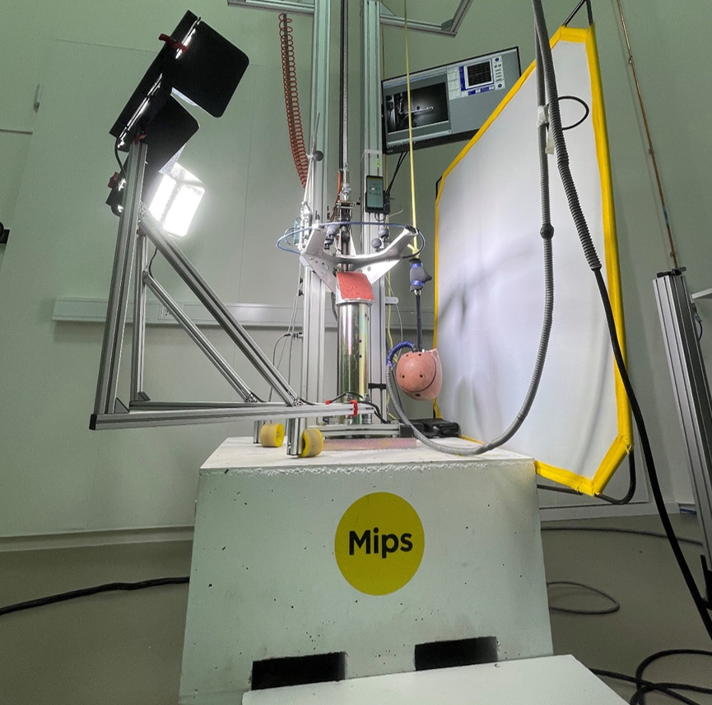
Inside Mips testing lab
____________________________________________________________
¹ Mips/Koroyd Acquisition Presentation
² Mips Q2 2026 Results
This information should not be taken as financial advice or a recommendation.
This communication was originally produced and approved on 20 Aug 2026 and has not been updated subsequently.