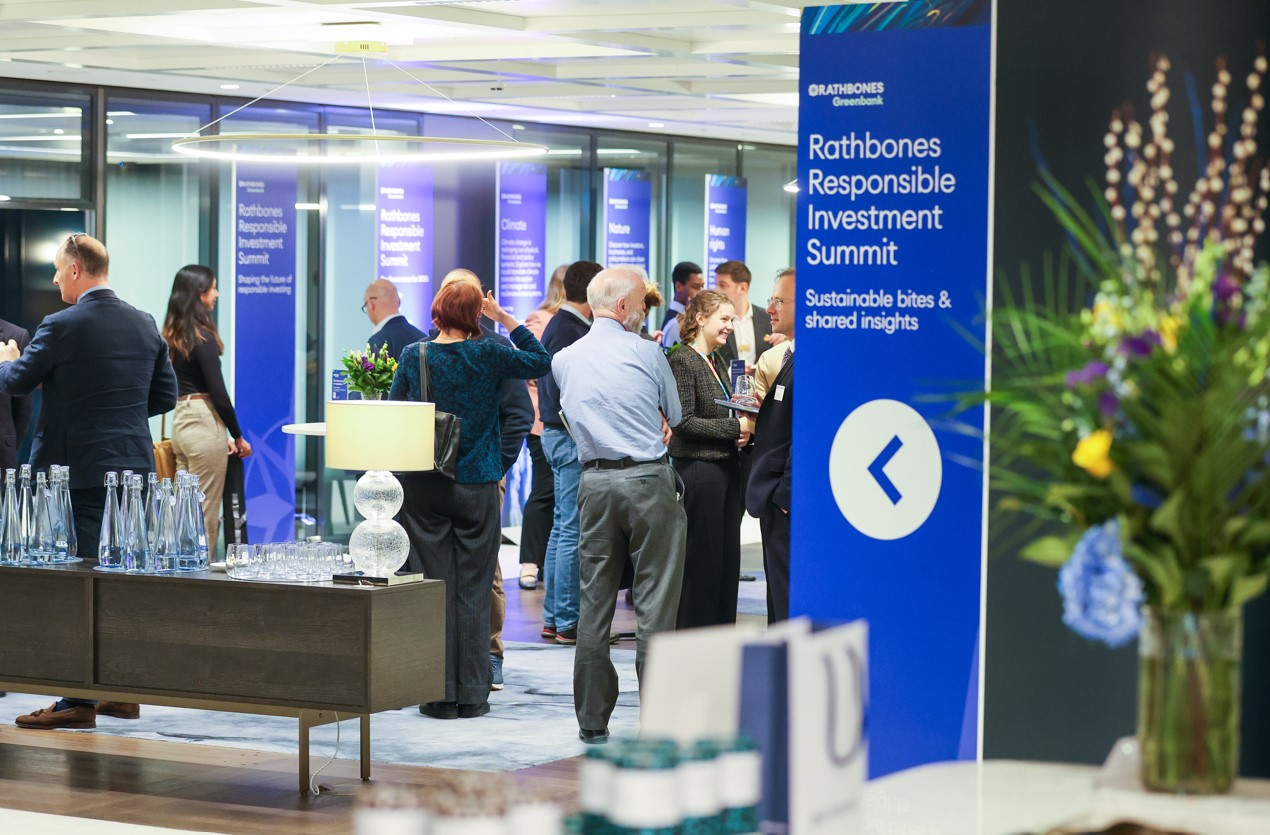
Our flagship summit brought together leaders in sustainable investment to examine the systemic risks shaping global markets – from climate change and biodiversity loss to human rights challenges – and the strategies investors can use to respond. We explored the future of ESG investing, how charities can align investments with their missions, and why adaptation, resilience and stewardship are critical for long-term success.
Rathbones Responsible Investment Summit 2025 - summary
3 December 2025
Article last updated 5 December 2025.
Practitioners and participants in the sustainable investment community convened at Rathbones’ London offices to discuss the trends and strategies shaping the future of responsible investing and explore ways to navigate an increasingly complex landscape of systemic and geopolitical risks. Opening addresses were followed by breakout sessions focused on integrating informed systemic risk analysis into investment decisions and how charities can align investments with their values and missions. Later panel discussions considered core objectives for three key systemic pressures: converting climate science into climate resilience, bridging the ambition gap between global biodiversity goals and real-world action, and integrating universal and indivisible human rights into all investment decisions.
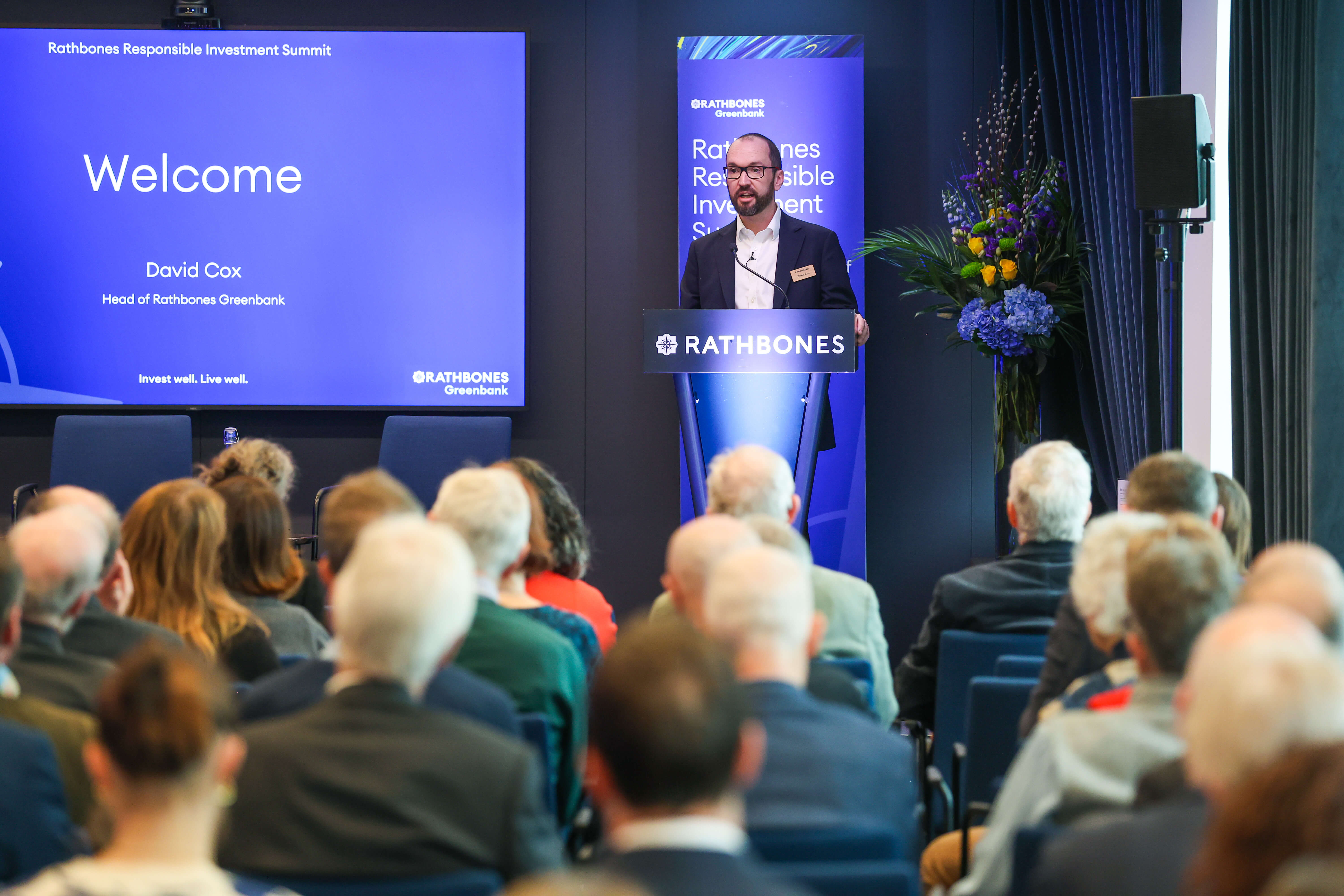
Introducing the day, Rathbones’ Chief Executive of Wealth, Camilla Stowell, observed that global systemic pressures have only increased since the signing of the Paris Agreement. Climate change tipping points, biodiversity loss and human rights challenges are no longer distant problems but current threats driving many of the outcomes impacting global ecosystems and shaping regional markets. Ignored, they risk irreparable harm to people and planet. Responsible investors face fickle markets, governmental intransigence and disruptive geopolitics, but the appetite and opportunity for sustainable investment remains strong. Persisting with responsible investment and stewardship strategies is key to influencing corporate behaviour, safeguarding returns, and ensuring that growth simultaneously benefits systems under pressure. The focus of Greenbank Investments in considering the wider context of people and planet through its investments and corporate engagements reflects the founding Rathbone family motto: "What ought to be done, can be done".
In considering the future shape and significance of ESG investing, James Alexander of the UK Sustainable Investment and Finance Association (UKSIF) reflected on the extraordinary expansion and development of sustainable investment over the last 30 years. Client demand, public support, increased investment data, scalable opportunities, and regulatory frameworks have all placed sustainability firmly in the political sphere, changing the transition narrative from a possible to an inevitable outcome.
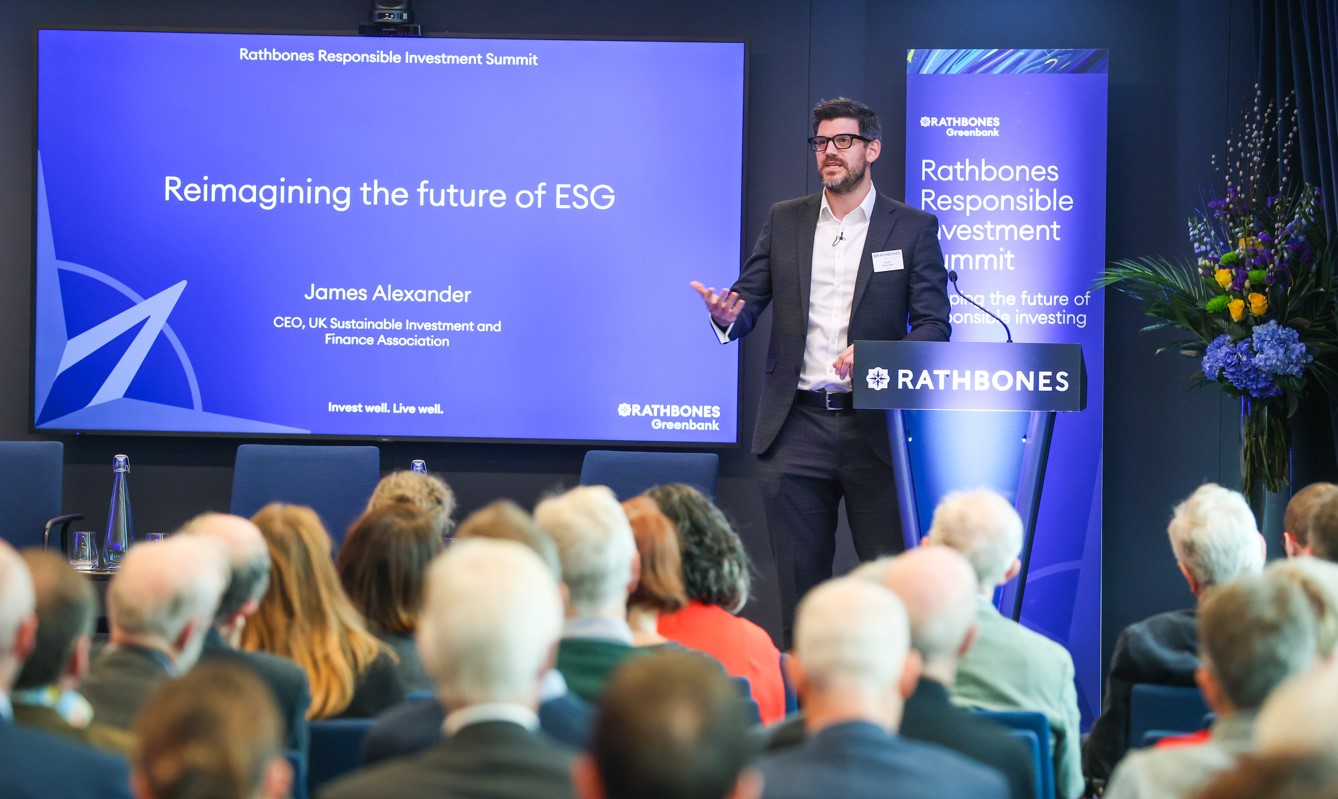
The Green Economy is the second-fastest growing sector after technology and AI. Lack of capital is no longer a barrier for advancing sustainable investments and projects, but we’re not seeing capital movement at the pace and scale required. The investment community has moved forward, but governments have fallen behind. Anti-net zero rhetoric and a broader social backlash has disrupted the policy environment, causing sustainable finance initiatives to lose traction. Policy is a major catalyst for change and governments need to think beyond the electoral cycle – policy vacuums and short-termism incentivise people to invest unsustainably. UKSIF’s members, representing £19 trillion of assets, use the power of their holdings to push the sustainability agenda politically and invert the risk equation, demonstrating the risks to governments who fail to fully support and finance the Green Economy; growth, competitiveness and a manageable cost of living could all be achieved in a policy-driven sustainable economy. Targeting increased adaptation finance will also be necessary to build resilience into economies and communities vulnerable to climate extremes.
The private client breakout session focused on investing well in a time of polycrisis – complex and interconnected systemic risks edging past the tipping point of resilience, threatening long-term wealth generation and global stability. Systemic risks represent cascading failures across systems that investors can’t simply diversify away from. Focusing on stocks of capital and the cashflows they generate often fails to consider the impacts of other interdependent forms of capital. Human and social systems are forms of capital creating trust flows between communities, institutions, governments and investment houses – a breakdown of trust across these bodies evidences a systemic fraying of social capital. Nature is also a form of capital providing essential ecosystem services to social and economic systems. Understanding how closely nature is embedded in social and commercial interests amplifies the scale of risk and accentuates the wider implications of biodiversity loss.
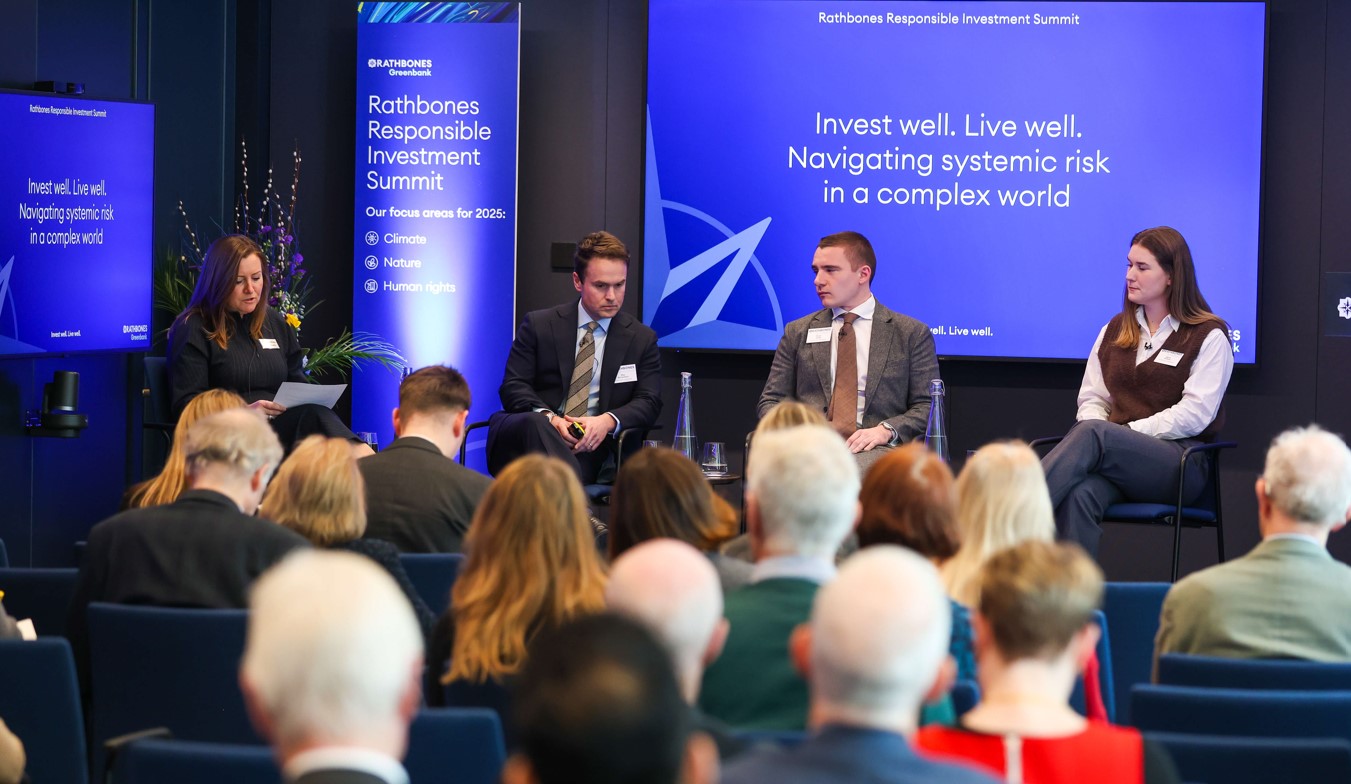
While risks generated by corporate behaviours and activities are generally more contained and manageable, systemic risks exponentially increase overall risk and simultaneously reduce the capacity of institutions to address them. The rise in climate extremes demonstrates how the resulting shocks to production, supplies and insurance are impacting global macroeconomics. Hurricane damage in the US costs around 0.3% of GDP every year. Weather extremes across Europe and the UK impact GDP and inflation. California – the world’s fifth-biggest economy – is experiencing increased insurance difficulties due to its high exposure to natural catastrophes. Modelling data systems like the one created by the Network for Greening the Financial System help investors forecast risk profiles for countries and regions and predict probable future scenarios incorporating climate policies and transition progress.
The charities session focused on the tools trustees can use to achieve the returns necessary to fund their missions while staying true to their investment values. In this space, the core strategies are negative exclusion in contentious sectors, positive alignment with sustainable development goals, ESG integration to consider the financial impact of investments, and engagement and stewardship to encourage greater corporate responsibility at an individual asset or sector-wide level. Reputation and trust are also critical drivers for charities operating in a sphere where donors have become more discerning about how they direct their capital. Some charities have experienced a decline in trust where sponsors who were fundamentally misaligned with core values have been identified. Pressure from staff is also causing charities to look more closely at areas of their business where mission alignment may be compromised.
Charities’ missions and financial requirements shouldn’t necessarily be mutually exclusive. Exclusion strategies especially should consider the short-term financial implications of exclusion and focus on long-term benefits. Trustees should also work with investment managers to ensure investment policies are clear and unambiguous regarding charity mandates. Investment houses should look to ensure alignment with those mandates throughout the investment process – regulatory changes in the US have seen investment houses rollback on their climate commitments and ESG integration in portfolios. Despite the politics, evidence still points to the conclusion that poor governance leads to poor performance over time.
After a sustainable lunch and networking opportunity, three panel sessions discussed some of the key questions facing climate risk and resilience, nature and human rights. The economic implications of climate change were considered by the government-commissioned Stern Review in 2006 to be the greatest market failure ever seen . Climate risks are non-linear, compounding and abrupt, making them difficult for traditional financial forecasting models to integrate. Climate tipping points expose economic and social vulnerabilities but also create the driving forces for adaptation and adoption. The global focus on mitigation must now turn more to adaptation as economies learn to plan long-term and improve the resilience of infrastructure as it weathers increasingly disruptive climate extremes.

With around half of global GDP at least moderately reliant on natural systems, the nature panel considered what we need to do to bridge the ambition gap and achieve interdependent climate and biodiversity goals: how we can avoid or reduce impacts and dependencies, protect and conserve nature, and drive collective action. The objective of the Kunming-Montreal Global Biodiversity Framework to protect 30% of the planet’s terrestrial and aquatic areas by 2030 is significantly off track and nature-related GDP risks may be higher than forecast – chronic nature degradation in the UK alone could reduce GDP by 3% by 2030 with imported risks threatening further losses. Climate regulation and water-related impacts rank as the highest risks to the domestic economy closely followed by the mediation of sensory impacts – how nature degradation and reduced access to green spaces impacts personal wellbeing.
The final panel session looked at the future of human rights in a world of rapidly evolving technological developments, complex supply chains and widening economic inequalities. In this world, human rights aren’t abstract ideals but practical commitments influencing how we work, invest, innovate and lead. Offering diverse perspectives from corporate strategy and responsible investment to social impact and advocacy, the panel explored how we can collectively guide policy and practice, bridge gaps in accountability, and inspire solutions to uphold universal human rights. The traceability of rights is extremely difficult in some jurisdictions and the size and condition of the “invisible workforce” in most countries – including the UK – remains largely unknown. Core questions tackled justice in human rights, the evolving effects of social media and AI on future rights and privacy, how we can integrate human rights into investment decisions, and how turning the spotlight on businesses mindful of the relationship between reputation and profitability might be an effective way to move the dial on policy change.
Greenbank’s Kate Elliot and Lindsay Hooper from the Cambridge Institute for Sustainability Leadership concluded by discussing the different drivers and solutions shaping the sustainability and investment landscape: why we need to accelerate a “necessary green industrial revolution”; how sustainability trends have become central to business thinking; what we can do to change the narrative of corporate responsibility from moral duty to commercial advantage; why leadership today must fuel optimism and target realistic goals; and why investor signalling to markets remains critically important.